How to find courts and people to play with
Public parks, community centers, gyms and clubs all host pickleball. Here is how to find courts near you, how open play works and how to join leagues and clinics.
Where pickleball is played
| Venue | Cost | Good for |
|---|---|---|
| Public park courts | Usually free | Open play, casual games, meeting locals |
| Community and recreation centers | Free or small drop-in fee | Indoor play, beginner sessions, scheduled times |
| School and community gyms rented by groups | Small fee | Winter and evening play |
| Private clubs and dedicated pickleball facilities | Membership or court booking | Reserved courts, leagues, coaching |
| Tennis clubs with converted courts | Varies | Mixed tennis and pickleball communities |
How to find courts
- USA Pickleball Places2Play: the governing body runs a public directory of courts at places2play.org, searchable by location, with notes on indoor or outdoor, number of courts and contact details. Listings are user-submitted, so call ahead when you can.
- Your city or county parks department: check its website for court locations, schedules and any reservation system.
- Court-booking and club apps: many facilities use online booking systems that also list open play sessions.
- Map apps: searching "pickleball courts" in a map app often shows parks with lines painted.
- Ask at the courts: regular players know where the beginner sessions, the competitive sessions and the indoor winter spots are.
How open play works
Most public courts run open play: anyone can show up, and players rotate in. Common systems:
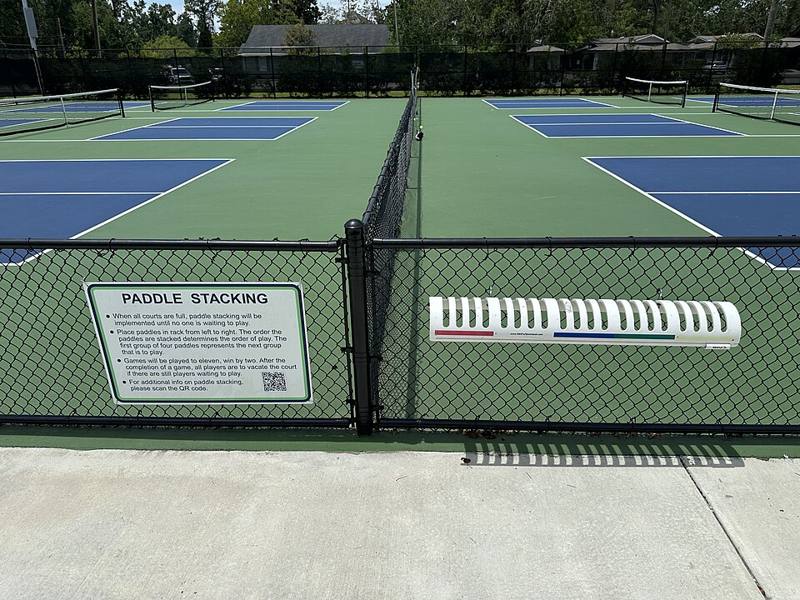
- Paddle stacking. Waiting players put their paddles in a rack or line. When a court finishes, the next four paddles go on.
- Challenge courts. Winners stay on for a set number of games and challengers wait their turn.
- Skill-level courts. Some sites mark courts by level, such as beginner, intermediate and advanced, or by time of day.
Read the posted rules before joining, and see court etiquette for the unwritten ones.
Visit at a quieter time first. Weekday late mornings at many parks are relaxed and full of patient players willing to help.
Clinics, lessons and leagues
- Beginner clinics: many parks departments and clubs run low-cost introductions covering rules, scoring and basic shots. They are the fastest way to start.
- Private and group lessons: a certified coach can fix grip and footwork problems early, before they become habits.
- Leagues: recreational leagues group players by level and schedule matches with set partners. They are great for consistent practice.
- Ladders and round robins: organized sessions where partners rotate and scores are tracked.
Finding partners at your level
Playing with people slightly better than you is the fastest way to improve, but playing with people at your level is the most fun. Ways to find both:
- Ask organizers which sessions suit your level.
- Use a rating, self-assessed or from a system like DUPR, to join level-based events. See ratings and DUPR.
- Join local social media groups or club messaging channels where players arrange games.
- Swap numbers with players you enjoyed playing with.
Before you go
- Pack water, both kinds of ball if you are not sure, and a hat.
- Wear court shoes, not running shoes. See shoes.
- Learn the score calling basics so you can call the score when you serve.
- Read your first game for exactly what to expect.
Playing at home
No courts nearby? A portable net and chalk or tape can turn a driveway, cul-de-sac or empty tennis court into a practice space. Even a wall works for volley and dink control drills. Check local rules before marking public surfaces.