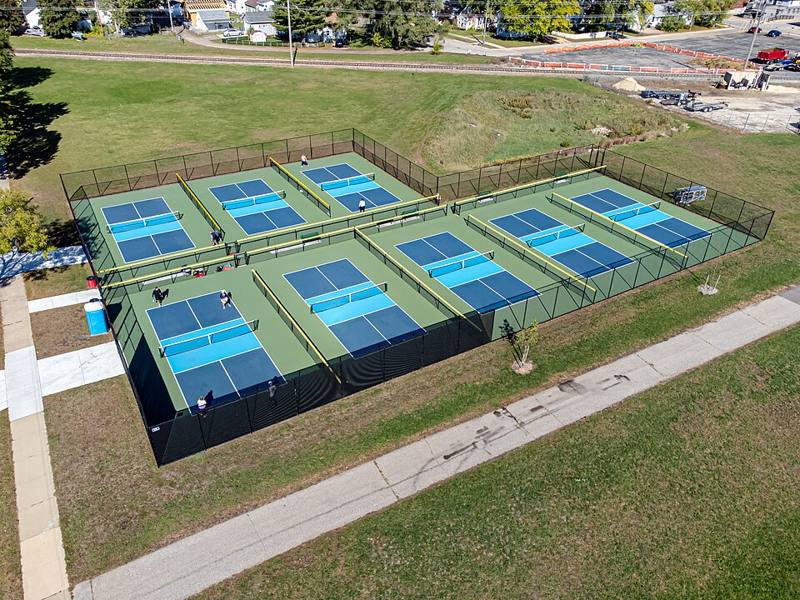
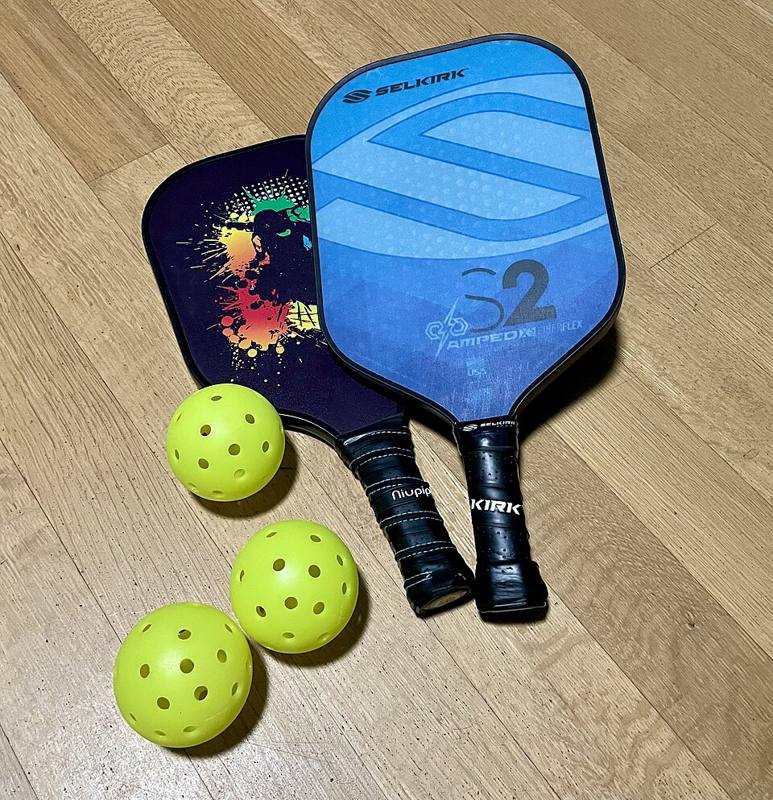
What is pickleball?
A paddle sport played with a perforated plastic ball on a badminton-sized court. Here is how a rally works, why it is so easy to learn and why so many people get hooked.
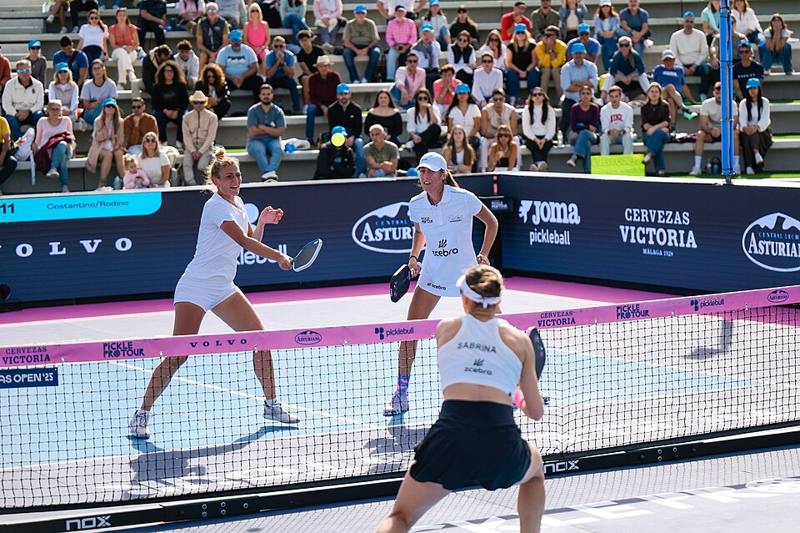
The game in one paragraph
Pickleball is a net sport for two or four players. Each player holds a solid paddle and hits a light plastic ball with holes in it over a net that is a little lower than a tennis net. The court is 20 feet wide and 44 feet long, the same size as a doubles badminton court. Serves are hit underhand and diagonally, the ball has to bounce once on each side before anyone can volley, and a 7-foot zone on each side of the net (the "kitchen") stops players from smashing everything out of the air. Most games are played to 11 points and you must win by 2.
If you have played tennis, badminton or table tennis, parts of pickleball will feel familiar. If you have never played a racket sport, that is fine too. Most people can rally on their first day.
How a rally works
- One player serves underhand from behind the baseline, diagonally into the opposite service box. See serve rules.
- The receiver must let the serve bounce before returning it.
- The serving team must let that return bounce too. This is the two-bounce rule.
- After those two bounces, anyone may hit the ball in the air (a volley) or after a bounce.
- The rally continues until someone hits the ball out, into the net, breaks a rule, or fails to return it.
In traditional scoring only the serving side can win points. Learn the details in side-out scoring.
Why it is so popular
- Short learning curve. The paddle has no strings and the ball is slow, so beginners make contact far more often than in tennis.
- Small court. Less running means players of very different ages and fitness levels can share a game.
- Social by design. Most courts run "open play," where you put your paddle in a line and rotate in with new partners. See etiquette.
- Cheap to start. A beginner paddle and a few balls cost far less than most sports, and many public courts are free.
- Deep strategy. Once you can rally, there is a whole soft game of dinks, drops and resets to master.
Doubles and singles
Doubles is the most common format at public courts and in recreational leagues. Each team has two players, and positioning and teamwork matter as much as shot power. Singles uses the same court and most of the same rules but rewards speed, deep serves and passing shots. Read singles rules and singles strategy when you are ready to try it.
The soft game and the hard game
Pickleball has two personalities. The hard game is drives, speed-ups and fast volley exchanges at the net. The soft game is the patient battle of dinks and drops that land in or near the kitchen, where the ball is hard to attack. New players usually love hitting hard. Improving players learn that the team that controls the soft game usually controls the point.
What you need to start
| Item | Why | Rough beginner approach |
|---|---|---|
| Paddle | Your only tool | A mid-weight composite or fiberglass paddle is a safe first choice |
| Balls | Indoor and outdoor balls differ | Buy the type that matches where you play |
| Court shoes | Lateral support for side-to-side moves | Tennis or court shoes, not running shoes |
| Eye protection | Fast balls at the net | Sports glasses are a smart extra |
Read equipment basics for more detail, then your first game for what to expect when you show up.
Your first goal is not to win. It is to keep the ball in play and learn where to stand. Points come fast once you stop hitting balls out.